A Place Spoken Before It Was Seen
Some places reveal themselves slowly, long before you ever arrive. The Espejillos waterfalls belong to that rare geography where memory, effort, and landscape merge into one experience. Since childhood, I had heard my father speak about Espejillos, a remote place near Santa Cruz that was described as beautiful yet difficult to reach.
Access was always part of the story. There was no proper road, only a clay path that became slippery even for a four-wheel-drive vehicle. The difficulty shaped the place long before any image could be made.
The Journey Shapes the Photograph
When I finally visited Bolivia decades later, more than forty years after my father first mentioned Espejillos, very little had changed. The road remained almost untouched by time. The journey itself defined the way the Espejillos waterfalls would later be photographed.
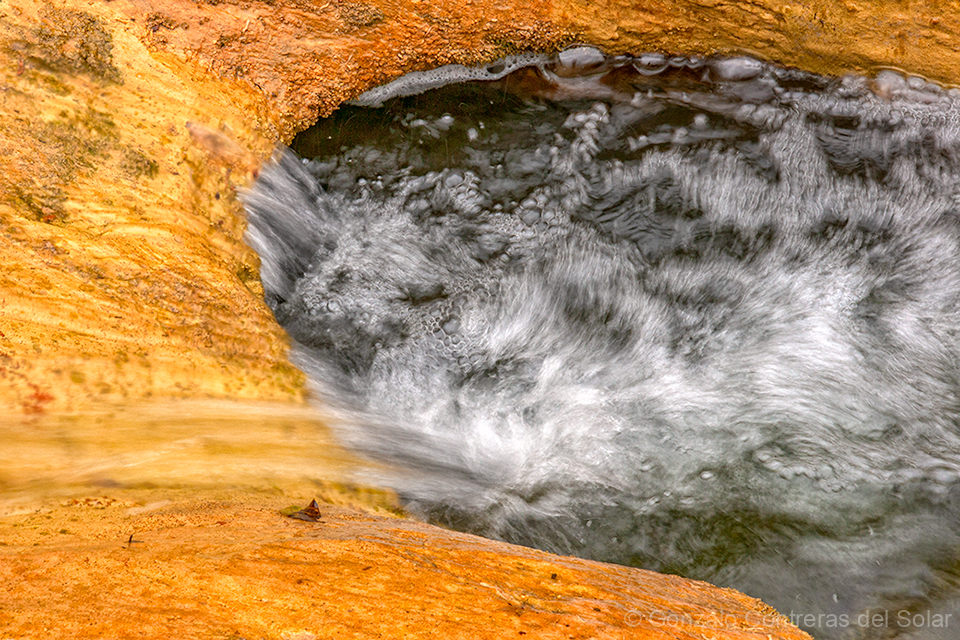
Before reaching the site, we relied on local guidance to cross the Piraí River. There were no signs and no GPS. Directions were shared from one traveler to another. Along the way, we stopped to help a smaller jeep trapped in the mud. Shortly after, we nearly became stuck ourselves.
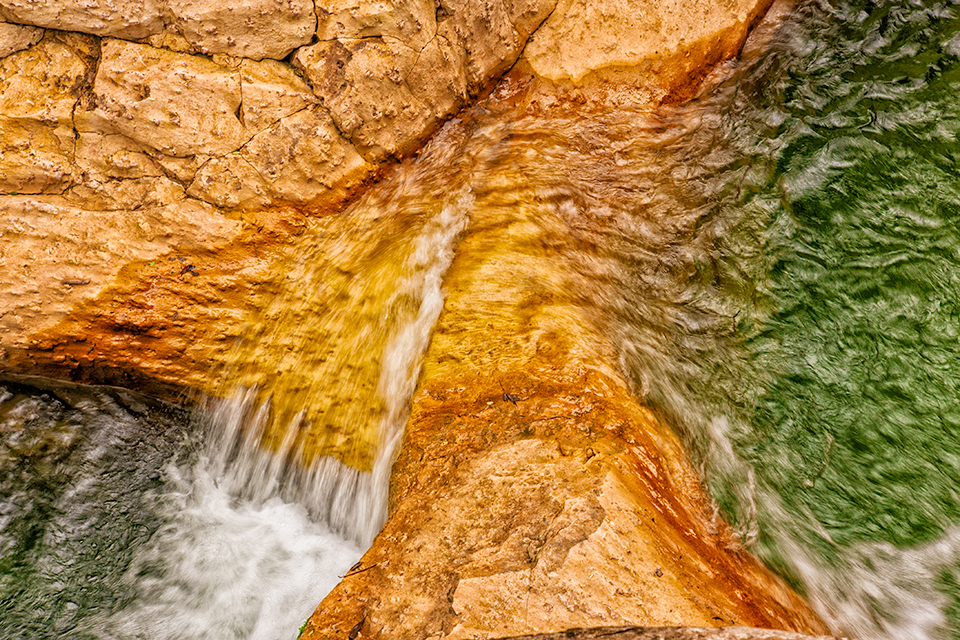
Winter reduced the number of mosquitoes, though not completely. They still left their mark. That discomfort became part of the experience and part of the memory carried into the work.
Arrival Without Announcement
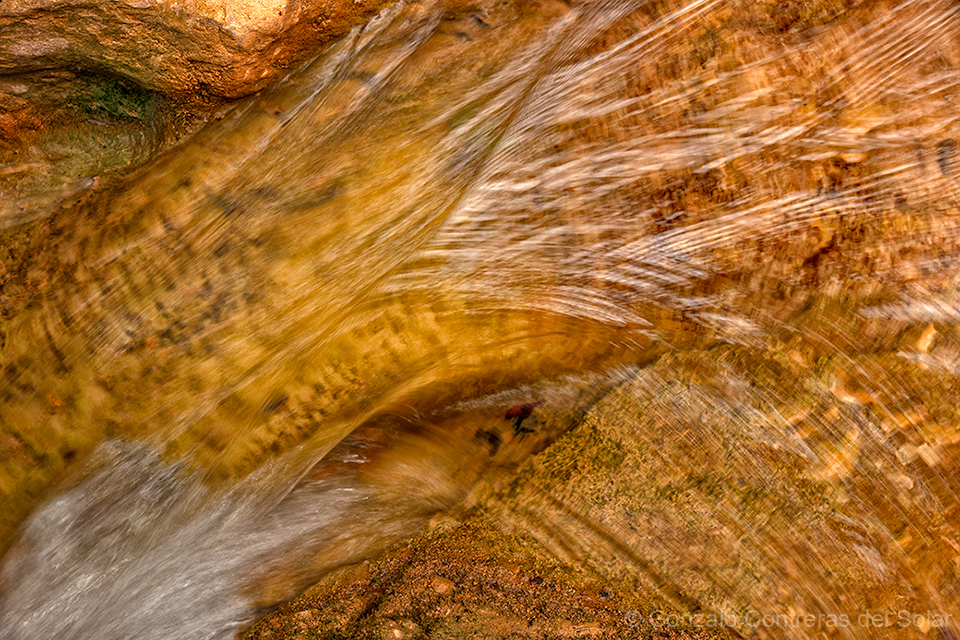
These images show more than the landscape. They include people moving carefully through the terrain, moments of hesitation, and vehicles covered in mud. The effort required to arrive is present in every frame.
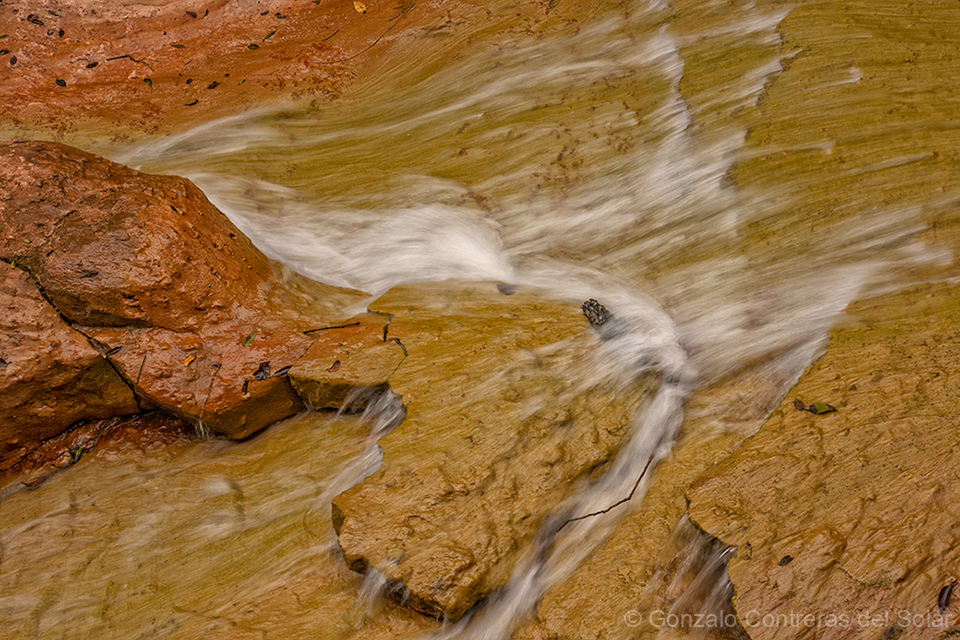
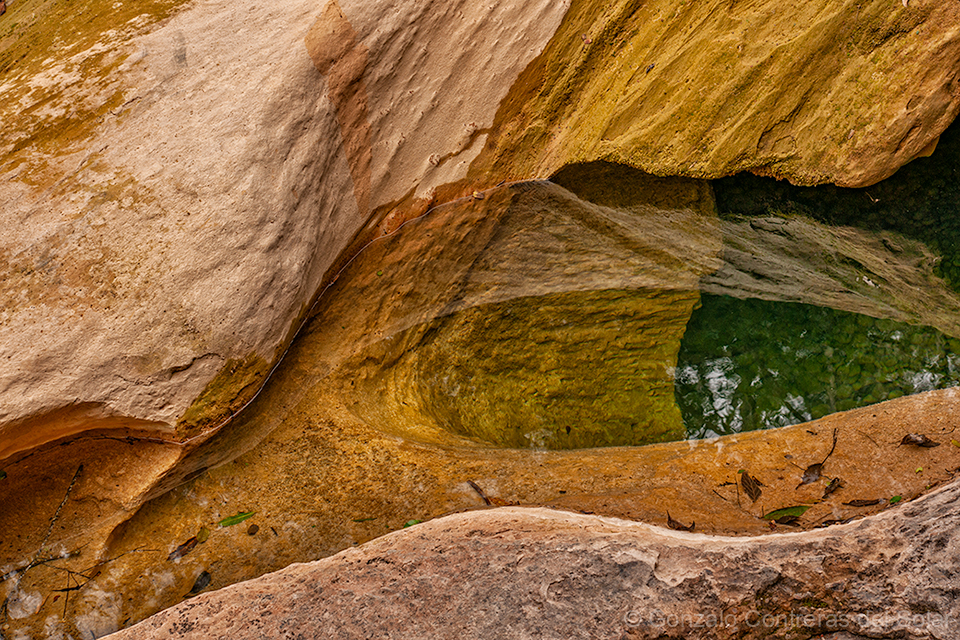
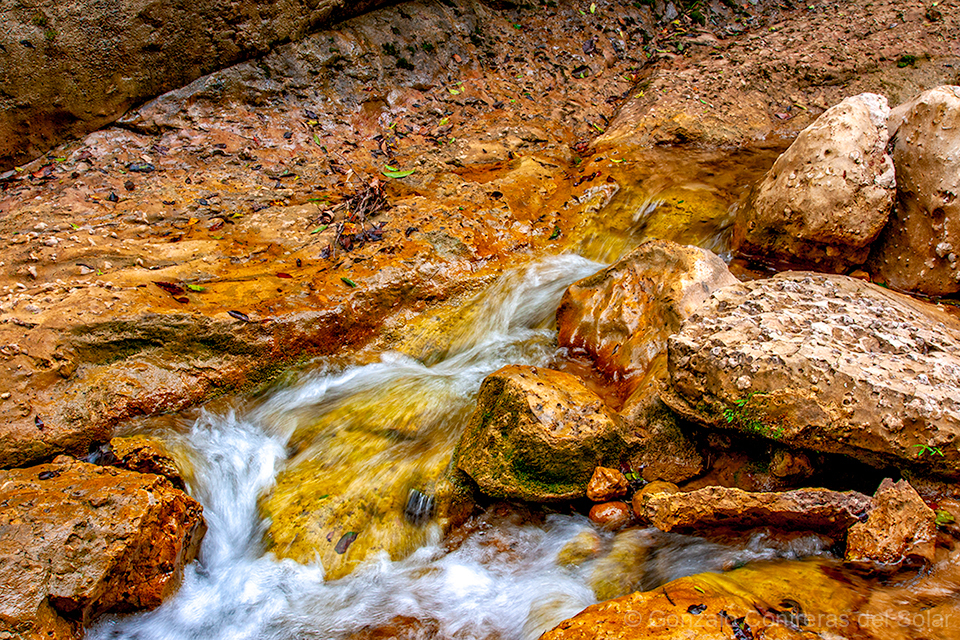
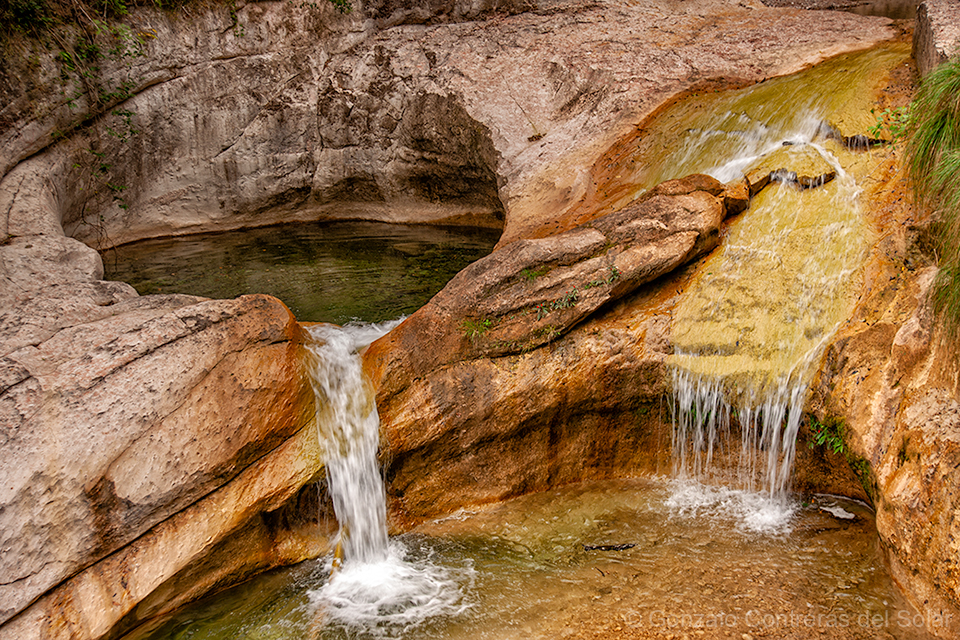
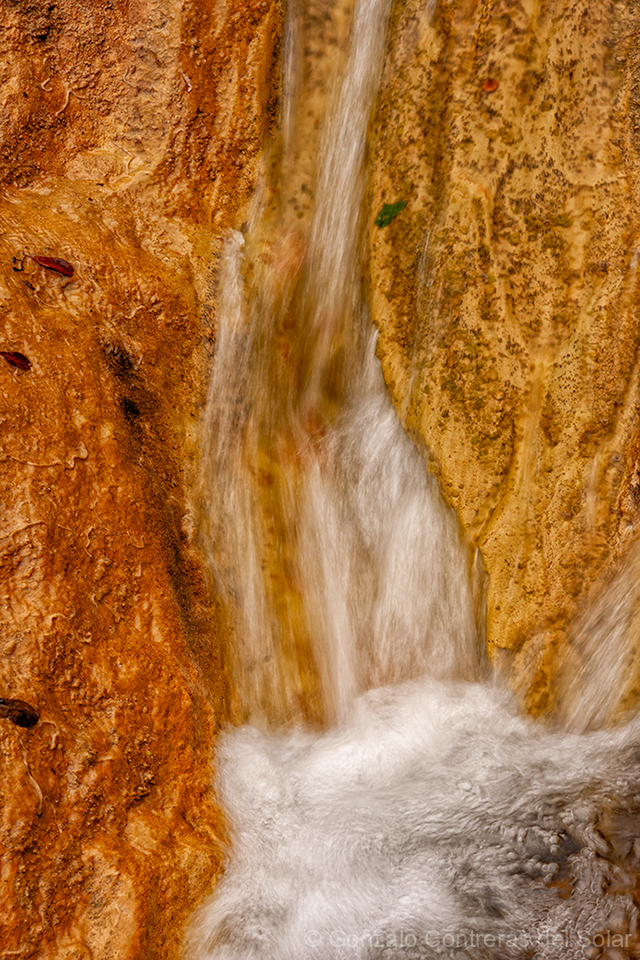
When we finally reached Espejillos, the reward appeared quietly. A narrow gorge opened in front of us. Crystal-clear water carved its way through layers of orange and ocher rock and clay sediments. Waterfalls appeared at different scales, some small and intimate, others more imposing.
Scale, Light, and Stillness
While I focused on textures and details, my children hiked toward the larger waterfall at the top. In one wider image, my brother stands near the falls. His presence offers scale to a place that feels both contained and expansive.
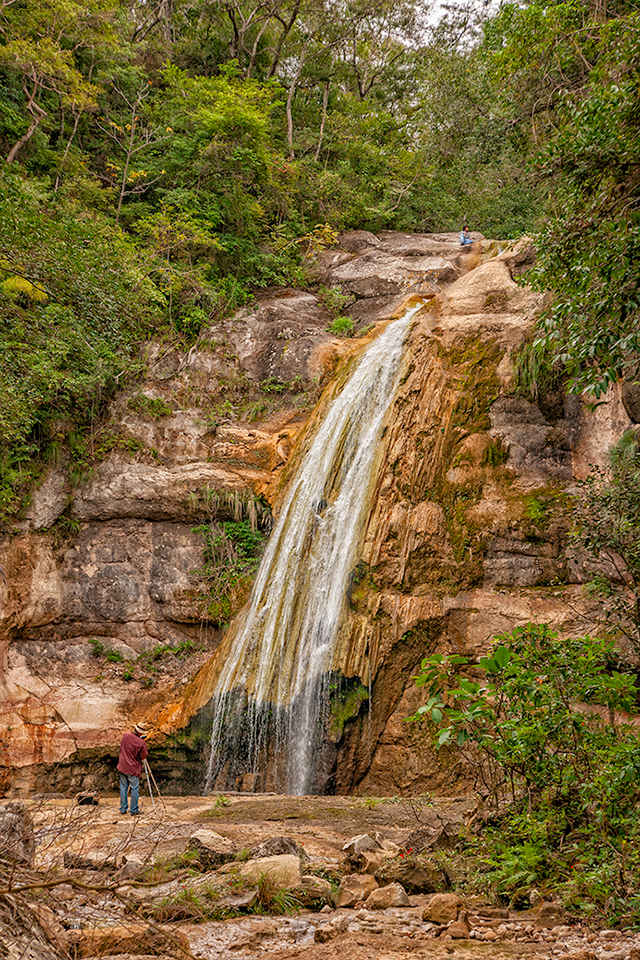
Cloud cover softened the light. This allowed the yellow-brown tones of the rocks and the movement of water to remain balanced. Nothing felt forced. The atmosphere seemed suspended.
When the Road Remains in the Image
These photographs, together with the video footage of the road and the journey, are not only about the Espejillos waterfalls as a destination. They speak about what it takes to arrive.
Sometimes, the road is not something you leave behind.
It stays inside the photograph.
For other posts related to my landscape work, explore within the blog posts of fine art photography where water, memory, and time become poetic meditation.